Ultimately, one’s character reflects one’s openness to God’s indwelling in one’s life.
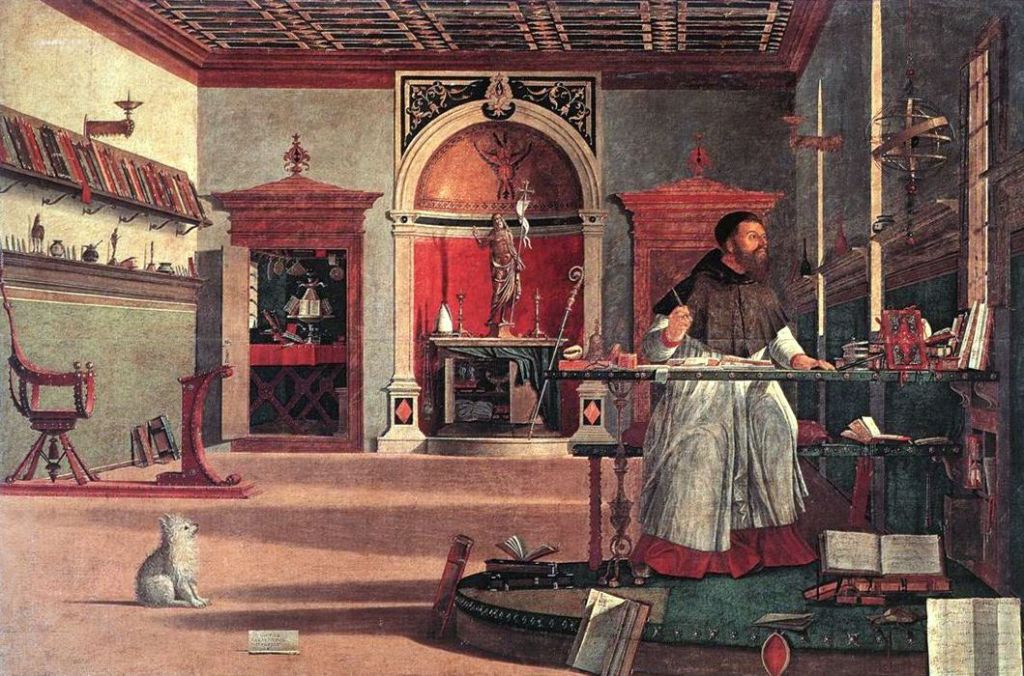
In one of his early works, De Beata Vita, Augustine aptly defines the Happy Life as knowing “piously and perfectly Him [the Holy Spirit] by whom you
are led to the Truth [the Son of God], whereby you may thoroughly enjoy the Truth, through which you may be joined to the Supreme Measure [God the Father].”1 If, then, divine truth is a measure of happiness, then, naturally, we are led to ask an infinite number of questions about the divine: Who/what is it? How might they/it interact with our lives? And how might we measure such?
For Augustine, happiness is not merely an abstract idea but a lived orientation toward God. This became strikingly clear to me in a recent conversation with my dad, who, by all intents and purposes, is a very rational person. In my understanding of him, life is measured by tangible successes: the completion of a hard day’s work, the dollar sign resting in your Roth IRA, the number of Insurance premiums you hold, and the like. And yet, in my conversation with him, I was able to grasp a few beautiful nuggets that answer this former quandary about the reality of God, which are surely worth sharing. I will break down my findings into two sections: an affirmation about God and an affirmation about life.
AN AFFIRMATION ABOUT GOD
We seem to like to distance ourselves from the reality of God, akin to the deism of Enlightenment thinkers. It is easier to pedestal God as the agent of creation without giving Him agency in today’s social strata. There is no room for a trinitarian equation. Still, rather, there must (at best) exist an ethereal reality of God’s godhead that permits the second and third persons of the trinity to exist in some ethereal, intangible reality that answers for the mundaneness of reality (in this deistic worldview). Modern Christologists might look toward the Chalcedonian definition to define a distinct yet conjoined second person of the Trinity to Christ as a plausible answer to the “Christ-ness” of all of creation. Further, Pentecostals might (and do) present a sensitive Spirituality that experientializes God without tangibly defining Him.2
As such intangibility seems to be signposting a crisis in Theology, I think that there is, seemingly, an excellent “Dad” answer to this. My dad wholeheartedly believes in an active, moving presence of God that supplies the meaning to the incoherency of life.
When I was three, my twin brother, Keith, was diagnosed with Autism. This diagnosis, unbeknownst to my infant self, was extremely difficult for my dad. And according to my family, my father fell into a deep depression. Surely the hopes and dreams of a life worth living (according to the secular terms of success, prosperity, and the like) were out of the question for my brother, who, at three years old, had barely lived a life worth quantifying or defining. How could my dad parent well when there was no advice to give, no college to finance, and no words of wisdom to share?
Yet, my dad persevered. Through avenues including a weekly men’s Bible study, the Walk to Emmaus program, and volunteering for the annual Chruch Spring Festival, my dad found true Christian Community. I think this reframed his view of God and God’s role in the created order. God is NOT quantifiable nor absent. God is wholly beautiful in His presence in creation. This need not be metaphysicized into the created order, where Christ, “in whom all things were made,” creates a Jesus-ness in all of creation. And yet, the simplicity of God’s beauty in the created order responds to my Dad’s deep yearnings. In lieu of my brother not being worthwhile, per se, he is a vessel of God’s beauty! And my Dad recapitulizes this daily, noting that my brother has taught him more about God than anyone else he knows. How beautiful it is that God’s presence is so truly tangible outside of the metrics we like to set. God’s tangibility is so inexhaustible that it is impossible to set rules or bounds about it. We cannot confine God to our expectations, our wants, our desires, or our yearnings, but rather, we must seek God in all things. As the prophet says: “You will seek [Him] and you will find [Him] when you seek [Him] with all your heart.”3
One of my professors recently suggested that there comes a breaking point in our lives where “A” no longer equals “A”; where we must integrate our lived experiences with our knowledge of reality in hopes of not losing our footing with God. How beautiful it is that in these moments we can seek to look right in front of us for God’s presence. For my dad, it was in the darkness of bad news that God revealed Himself in my brother’s life. Indeed, my brother is a beacon of God’s love to all those around him.
What might we do with this? It is terrific to assume that God is tangibly beautiful in the mundane around us. But what are we to do when it is not apparent? Let’s look to the next point.
AN AFFIRMATION ABOUT LIFE
Rather than the the eschaton, the Happy Life is the τελος of our lives.
Of course, we are living “in “while we wait for the blessed hope—the appearing of the glory of our great God and Savior, Jesus Christ.”4 Nonetheless, I think that we have a propensity to live with nihilistic tendencies that are easily answered by the eschaton. It is simple to say “the world sucks. Let’s just hope for a good eternity.” And, bluntly, this is true. However, we aren’t put on this earth as pawns awaiting this eternal glory just for us to suffer the wrath of Satan, inflicting pain in our miserable lives. We are called to live purpose-driven lives.
I found rather interesting in my conversation with my dad his view of death. Bereft of a parent, yet still experiencing the waning lifetimes of many of his aunts and uncles, my dad has seen the philosophical effects of death on the human experience firsthand any number of times. And yet, what has stuck with him the most is the value of productivity in the purpose-driven life. He is convinced that it is plausible to “be done” and “be ready to go to the Lord” once one’s job on Earth is done. His proof is notably his own father, who, shortly (less than two years) upon retiring from his lifelong job at an implement company, succumbed to late-term blood cancer. Is it physiologically possible to prolong life when there is a purpose driving it? Can purposelessness lead to death? I believe that, despite the philosophical loopholes surrounding this complex discussion, there is something to be learned from this perspective.
While we are eschatologically facing beings as Christians, we must be real about our calling on earth. There is a form of praxis between the eschaton and the value added by our lives to the created order. And this is metaphysically simple to answer for – we were made in the image and likeness of God and called toward stewardship. As such, anything short of accomplishing this goal is incongruent with God’s calling for us.
For my dad, this is systematic. Every part of the well-lived life is contingent on fulfilling God’s calling. From proper maintenance of property, to lived-out creativity, to well-stewarded finances, to proper planning, and more, ALL of it contributes to God’s great task of sub-creation, as Tolkien puts it. While this is not merit-based, it is character-determinative. This is to say that while one’s Godliness is not testable by these parameters, one’s character is. Ultimately, one’s character reflects one’s openness to God’s indwelling in one’s life.
I use my dad as a reference point for this article for several reasons. First, (and of course, bias-driven), he is my father, of whom I look toward for my own perceptions of a life well lived. It is near impossible to discount the advice of a role model. As such, I am indebted to his worldview in my own efforts to discern the Happy Life. But in addition, I found his constructive worldview extremely fascinating. As a practicing Catholic, you would likely assume a merit-based idealism that is constructed congruent with the purpose-driven life. However, my dad’s theology seems to be much more pneumatological and grace-driven. I think that this does two things: 1) reinforces the gospel centered message of Catholicism present in Biblically-sound congregations and communities, and 2) showcases the distinct differences between salvation and sanctification conversations. If we attempt to answer the question of the Happy Life with a τελος of the eschaton, then salvation would be our aim. However, if we view the question as a sanctifying one, then we can try to answer the question of “what do we do now?” This IS the church. Yes, we are called to evangelize in hopes of the salvation of souls. But even more so, we are called to be a hospital for the sick. We are called to bring those in Christ to the greatest possible life worth living, as it is this life that reveals the wholeness of Christ crucified for the world. We should be living a life aimed toward θεωσις, toward the beauty of being an icon of Christ for our communities – those closest to us whom we love. Might we live in a way that brings the joy of the risen Lord from the hopefulness of the eschaton to the mundaneness of our present reality?
The Happy Life, then, is not only a future hope but a present sanctification: knowledge of God, enjoyment of God, and mindful participation in His creation. This is what my dad has taught me, and what Augustine knew all along—that happiness is nothing less than life lived in God.
- Augustine. 2019. On the Happy Life. Yale University Press. 50. Interpretations of the Trinitarian formula inspired by the work of Dr. Michael Foley. ↩︎
- I mean not to condemn nor cast judgment. This is solely my conjecture about the modern response to the perceived intangibility of God. ↩︎
- Jeremiah 29:13. ↩︎
- Titus 2:13. ↩︎
 Theology Scout
Leave a comment